
Logging into OKX, Spot Trading, and Web3—A Trader’s Practical Run-Through
- Posted by Jhordan Salazar
- 0 Comment(s)
Okay, so check this out—I’ve logged into more exchanges than I can comfortably admit. Really. Wow! My instinct said OKX would be another polished interface, and at first glance it is: clean, fast, and with enough depth to make a day trader happy. But something felt off about the onboarding flow for newcomers—there are little UX landmines that trip people up. I’m biased, but that part bugs me.
Here’s the thing. For US-based traders who want to jump into OKX spot trading and also poke around Web3 features, the path from «open account» to «place first order» is not always linear. On one hand, you get robust custody options and fiat rails; on the other, regulatory nuances and verification waits can make you impatient. Initially I thought the login was just another login, but then realized that two-factor, device trust, and Web3 wallet bridging add friction—though actually, that friction improves security if you stick with it.
First impressions matter. Seriously? Yeah—if your first login slams you with pop-ups about KYC and connectivity, your mood shifts. My gut told me to write down the steps that actually work in practice for spot trading and for connecting Web3 wallets. So, below I walk through the practical sequence I use, from login to executing a spot trade, and finally bridging into simple Web3 actions. Some steps are obvious, some are small gotchas—so bear with me.
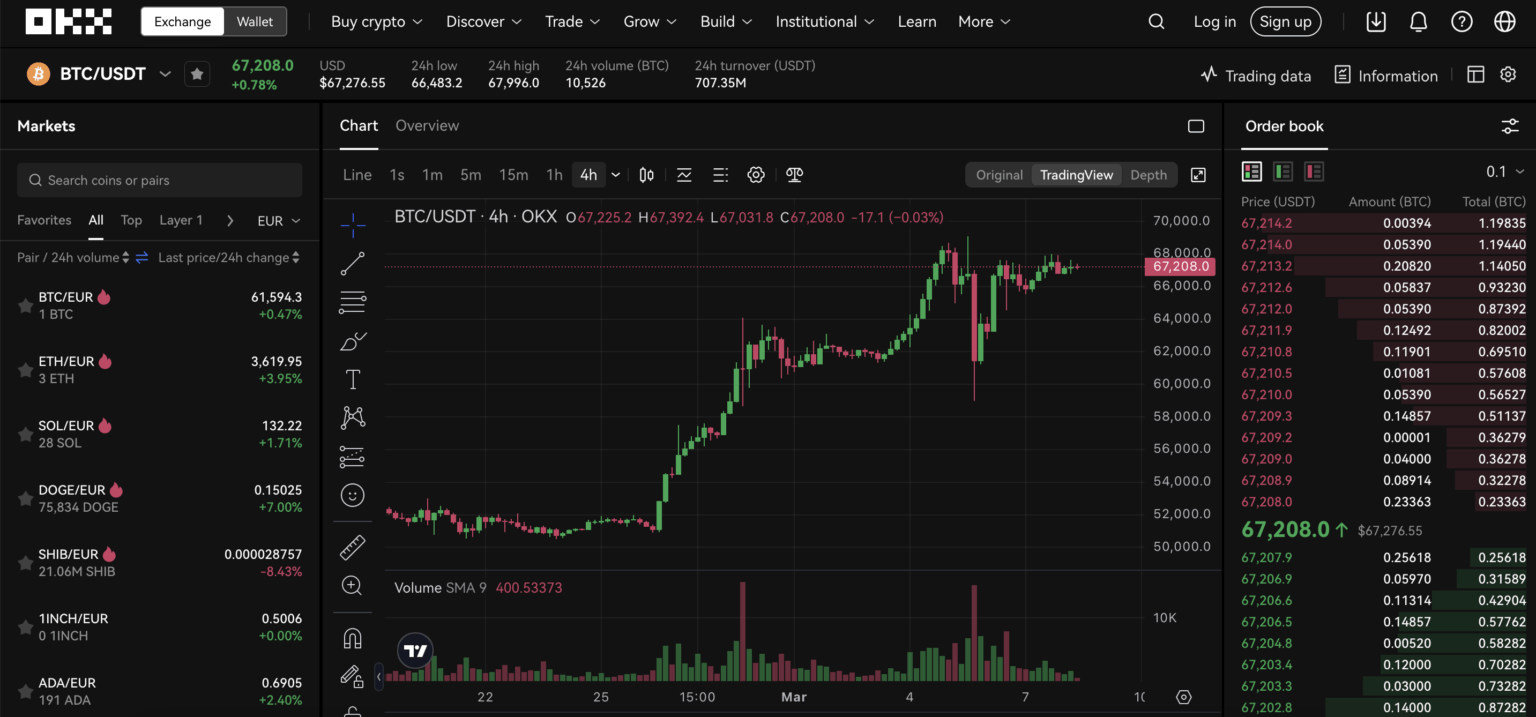
Step 1 — Getting In: OKX Login Essentials
Whoa! Quick tip: have your email and phone handy. Medium tip: use an authenticator app. Longer thought—if you’ve ever been locked out because of SMS delays or a misplaced device, you’ll appreciate the subtle advantage of an app-based TOTP: it lets you get back into trading faster without waiting on carrier hiccups. Initially I logged in with SMS a few times, then moved to Google Authenticator. Much better.
Here’s how I usually approach it: create your account, verify email, then set up two-factor with an app (not SMS). On one hand it’s extra work; on the other, it’s the only way to avoid the late-night panic when a trade needs to be closed. Something to note—OKX will often ask you to mark devices as trusted, and that helps if you mostly trade from the same laptop. But if you hop across devices, don’t mark them blindly. I’m not 100% sure about every nuance of their trust policy, but practice shows restraint is wise.
One practical resource I reference sometimes is available here. It’s a little guide that walked me through a step I had forgotten—oh, and by the way, it saved me from a two-hour verification loop once. Not sponsored—just helpful.
Step 2 — Verification & Compliance: The Necessary Pause
Hmm… verification can be quick or painfully slow. My experience is that timing depends on volume and your ID type. Some folks breeze through in 15 minutes; others wait days. If you’re in the US and plan to deposit fiat, expect identity and sometimes address verification. Plan ahead—don’t try to fund and trade during a market spike unless you’re verified. That’s a rookie move.
Actually, wait—let me rephrase that: start verification before you need to trade hard. Prepare a clean photo of your ID, a utility bill or bank statement if requested, and use steady lighting. On one hand the process is automated; on the other hand edge cases trigger manual review. My instinct said “this will be fine,” but once an edge case hit me and I had to submit secondary documents. Not fun, but manageable.
Step 3 — Funding Your Account for Spot Trading
Short primer: fiat or crypto. Both work. Medium detail: ACH and wire are common in the US, and crypto deposits are typically faster if you already have funds elsewhere. Longer thought—if you use fiat, check fees and limits carefully and be aware of bank processing times because they can delay your first spot trade, and market conditions may change while you wait.
When I fund via crypto, I double-check network and memo/tag requirements—this is basic but people still send funds wrong. Seriously, double-check. Also: small test deposit before big sums. I learned that the hard way—one hop, wrong chain, and I had to use a support ticket to recover funds. Not ideal.
Step 4 — Placing Your First Spot Trade
Alright, the fun part. Spot trading on OKX is straightforward: choose markets, select order type, set size, hit buy/sell. Here’s what I do: start with limit orders to avoid slippage for illiquid pairs; use market orders only when you need immediate execution. This part’s intuitive—though new traders sometimes ignore order types and get surprises.
Pro tip: customize the trading interface. OKX lets you pin favorite pairs and set chart layouts. My instinct said cluttered workspace = chaos, so I simplify: two charts, order book, and order entry. Over time, that arrangement speeds decision-making. Something felt off when I first used the default layout—it was noisy. I pared it down and never looked back.
Step 5 — Simple Risk Controls
Short: set limits. Medium: use stop-losses and position sizing. Long: trading’s emotional, so commit to rules—decide your max position size and enforce it with tools, not promises to yourself. My experience shows automation reduces regret. Seriously.
I’ll be honest—I still second-guess trades. On one hand it’s humility; on the other, it’s a performance killer. So I use the platform’s order automation where possible. Pick a sane stop, and if you’re experimenting with leverage, treat it like a separate account.
Step 6 — OKX Web3: Bridging and Wallets
Okay, so Web3 features on OKX open a different set of doors. You can connect an external wallet, view NFT assets, and interact with Dapps. My first reaction was curiosity; then a bit of caution. On the practical side, use a dedicated wallet for Web3 interactions—don’t mix your main exchange account credentials into every Dapp. Something felt off the first time I connected a wallet without thinking; thankfully no funds lost, but risk exists.
Initial thoughts: MetaMask or hardware wallets provide stronger security. Later, I tested OKX’s wallet integration and liked that it supports multiple networks. However, bridging assets across chains carries fees and sometimes delays—plan your timing. On the other hand, bridging can be a great way to access specific DeFi liquidity pools not available on the main chain.
Common Gotchas and How I Handle Them
1) Two-factor lockouts: Keep backup codes. Seriously.
2) Wrong chain deposits: Test with tiny amounts.
3) Verification delays: Start early, track support tickets.
4) Unexpected UI changes: Save screenshots of settings you like; platforms update frequently.
It’s messy sometimes. I repeat steps, tweak settings, and occasionally curse at popup modals… but most problems have a fix. My rule: reduce friction where possible, but never sacrifice security for speed. I’m not 100% perfect at this, but experience helps.
FAQ
How do I log in to OKX safely?
Use a strong password, enable app-based two-factor authentication, and avoid public Wi‑Fi for trading sessions. Keep backup 2FA codes offline. If you use multiple devices, mark trusted devices selectively and remove old ones regularly.
Can I use OKX for both spot trading and Web3 activities?
Yes. Spot trading and Web3 are separate but connected experiences. You can trade spot pairs on the exchange and also connect wallets for Web3 interactions like NFTs and Dapps. Keep funds segmented—exchange funds for trading, separate wallet funds for Dapps when possible.
What if my verification is delayed?
Check your email for requested documents, upload clear photos, and contact support with ticket references. Sometimes a small missing detail triggers manual review; fix it and resubmit. Meanwhile, avoid trying to trade urgent moves until verified because that causes stress—trust me.
Final thought—this whole process can feel like jumping through hoops, but the hoops exist for a reason. I’m excited about OKX’s mix of spot trading features and Web3 integration, though I’m wary when products try to do everything at once. If you stick to basic security hygiene, do small test transfers, and keep calm when verification hiccups happen, you’ll be fine. Something about the ecosystem keeps pulling me back—maybe it’s the speed, maybe the tools, maybe the hope of catching one more market move—and I’ll keep logging in and learning.